
Zopiclone Overview
Description:
Zopiclone is a prescription medication commonly used for the short-term treatment of insomnia or difficulty sleeping. It helps initiate and maintain sleep by acting on the central nervous system.
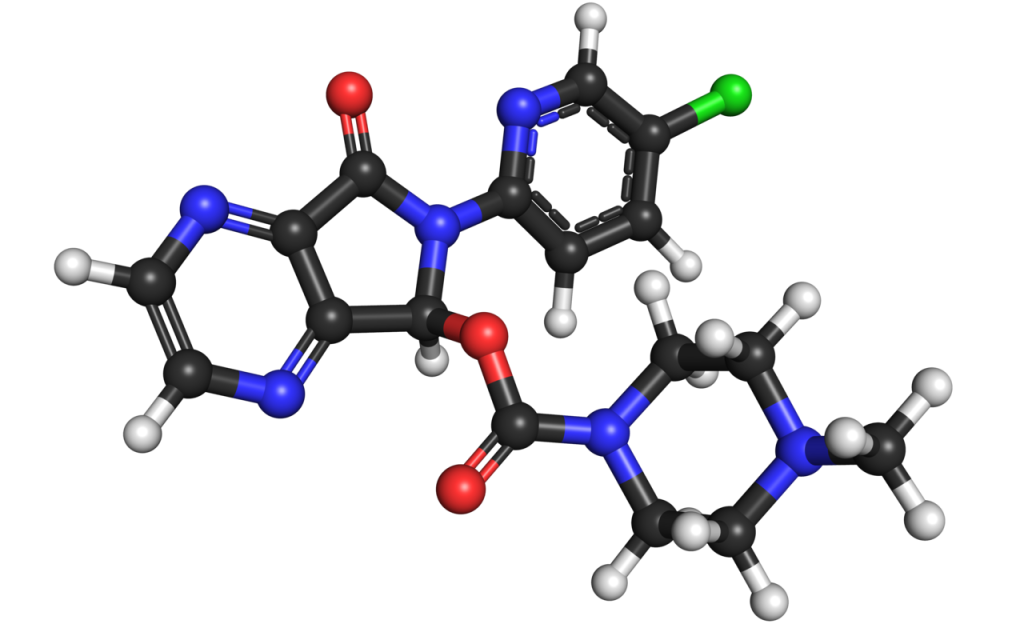
DrugBank ID:
DB01198
Modality:
Small molecule
Explore a selection of our essential drug information below, or
Here’s a rewritten version of that sentence in a few different styles. Let me know which direction you prefer:
1. Professional and Clear
Browse our curated list of essential drug information below.
2. Friendly and Inviting
Take a look at some of our must-know drug information below!
3. Academic/Formal
Explore the comprehensive drug information we’ve compiled for your reference below.
4. Marketing-Oriented
Discover key drug insights handpicked to support your health decisions.
Would you like me to rewrite more of the content?
‘
A dose-range finding study of zopiclone in insomniac patients
1. Professional / Academic
Evaluation of Zopiclone Dose Ranges in Patients with Insomnia
2. More Descriptive
Investigating Optimal Dosage of Zopiclone for the Treatment of Insomnia
3. Concise / Journal-Style
Dose-Range Study of Zopiclone in Insomnia Patients
4. Clinical Trial-Oriented
A Clinical Evaluation of Zopiclone Dosage Ranges in Individuals with Insomnia
Zopiclone Overview
- Brand Names: Imovane, Zimovane, among others
- Drug Class: Nonbenzodiazepine hypnotic (specifically a cyclopyrrolone)
- Use: Short-term treatment of insomnia, especially in cases involving difficulty falling asleep or frequent night awakenings.
Mechanism of Action
- Though structurally unrelated to benzodiazepines, Zopiclone binds to the benzodiazepine site on GABAA receptors.
- Acts as a positive allosteric modulator, enhancing GABAergic transmission → CNS depression → sedative/hypnotic effects.
- Its action is similar to benzodiazepines, but with distinct chemical structure and potentially fewer anxiolytic or muscle relaxant effects.
Pharmacological Effects
- Sedative
- Hypnotic
- Anxiolytic (mild)
- Amnesic
- Muscle relaxant (minimal)
Dependence and Withdrawal
- Prolonged use (even at therapeutic doses) may lead to:
- Tolerance
- Psychological dependence
- Physical dependence
- Withdrawal symptoms (similar to benzodiazepine withdrawal but generally milder):
- Rebound insomnia
- Anxiety
- Irritability
- Agitation
- Sweating
- Tremors
- Less commonly: perceptual disturbances or confusion
Important: Unlike high-dose benzodiazepine withdrawal, zopiclone withdrawal rarely causes seizures or life-threatening complications—but severe psychological symptoms (like panic or agitation) can occur and lead to emergency room visits.
Clinical Considerations
- Recommended for short-term use only (usually 2–4 weeks), due to risk of dependence and tolerance.
- Should be tapered gradually if used long-term, rather than stopped abruptly.
- Patients with a history of substance use disorder, elderly, or those with psychiatric comorbidities should be monitored carefully.
Zopiclone UK
- A benzodiazepine-related hypnotic, used short-term for treating insomnia.
- Belongs to a group of drugs known as “Z-drugs” (non-benzodiazepine sedatives).
- Controlled under UK law as a Class C drug due to the risk of dependence.
Dosage Forms
- Tablets: 3.75 mg and 7.5 mg
- May also be available in liquid form (less common)
💊 Always check the Patient Information Leaflet (PIL) included in the medication box for your specific dose and formulation.
Where to Find More Information
You can access official PILs and detailed drug data at:
Need Help or Have Questions?
- Speak to your GP, prescribing clinician, or pharmacist
- Call NHS 111 (England or Wales) for urgent advice
Reporting Side Effects
If you experience unexpected or serious side effects, report them to the MHRA Yellow Card Scheme:
🔗 https://yellowcard.mhra.gov.uk
This helps monitor drug safety across the UK.
More Resources
- 🔹 Sleeping pills and minor tranquillisers – How they work, side effects, withdrawal
- 🔹 Coming off psychiatric drugs – Planning your withdrawal safely
- 🔹 Coping with side effects – Practical advice
- 🔹 Psychiatric medication overview – Your rights and treatment options
| Trade names | Imovane, Zimovane, Dopareel, others |
|---|---|
| AHFS/Drugs.com | International Drug Names |
| Pregnancy category | AU: C |
| Routes of administration | Oral tablets, 3.75 mg or 7.5mg (UK), 5 mg, 7.5 mg, or 10 mg (JP) |
| ATC code | N05CF01 (WHO) |
| Legal status | |
| Legal status | AU: S4 (Prescription only)BR: Class B1 (Psychoactive drugs)[1]CA: ℞-onlyNZ: Class CUK: Class CUS: Schedule IVIn general: ℞ (Prescription only) |
| Pharmacokinetic data | |
| Bioavailability | 75–80%[2] |
| Protein binding | 52–59% |
| Metabolism | Hepatic through CYP3A4 and CYP2E1 |
| Elimination half-life | ~5 hours (3.5–6.5 hours) ~7–9 hours for 65+ years old |
| Excretion | Urine (80%) |
| Identifiers | |
| IUPAC name | |
| CAS Number | 43200-80-2 |
| PubChem CID | 5735 |
| IUPHAR/BPS | 7430 |
| DrugBank | DB01198 |
| ChemSpider | 5533 |
| UNII | 03A5ORL08Q |
| KEGG | D01372 |
| ChEBI | CHEBI:32315 |
| ChEMBL | ChEMBL135400 |
| PDB ligand | ZPC (PDBe, RCSB PDB) |
| CompTox Dashboard (EPA) | DTXSID4041155 |
| ECHA InfoCard | 100.051.018 |
| Chemical and physical data | |
| Formula | C17H17ClN6O3 |
| Molar mass | 388.81 g·mol−1 |
References
- Anvisa (2023-03-31). “RDC Nº 784 – Listas de Substâncias Entorpecentes, Psicotrópicas, Precursoras e Outras sob Controle Especial” [Collegiate Board Resolution No. 784 – Lists of Narcotic, Psychotropic, Precursor, and Other Substances under Special Control] (in Brazilian Portuguese). Diário Oficial da União (published 2023-04-04). Archived from the original on 2023-08-03. Retrieved 2023-08-16.
- “Assessment of Zopiclone” (PDF). World Health Organization. Essential Medicines and Health Products. World Health Organization. 2006. p. 9 (Section 5. Pharmacokinetics). Retrieved 5 December 2015.
- “Zopiclone consumer information from”. Drugs.com. Retrieved 2013-06-06.
- “Chapter 3 – The technologies, section 3.4”, Clinical need and practice – Guidance on the use of zaleplon, zolpidem and zopiclone for the short-term management of insomnia, National Institute for Health and Care Excellence (NICE), 28 April 2004, Technology appraisal guidance [TA77],
This guidance will be reviewed if there is new evidence.
Current as of 8 June 2023 - Van Der Kleijn E (1989). “Effects of zopiclone and temazepam on sleep, behaviour and mood during the day”. European Journal of Clinical Pharmacology. 36 (3): 247–251. doi:10.1007/BF00558155. ISSN 0031-6970. PMID 2744064.
- “What’s wrong with prescribing hypnotics?”. Drug and Therapeutics Bulletin. 42 (12): 89–93. December 2004. doi:10.1136/dtb.2004.421289. PMID 15587763. S2CID 40188442.
- Touitou Y (July 2007). “[Sleep disorders and hypnotic agents: medical, social and economical impact]”. Annales Pharmaceutiques Françaises (in French). 65 (4): 230–238. doi:10.1016/s0003-4509(07)90041-3. PMID 17652991.
- Liira J, Verbeek JH, Costa G, Driscoll TR, Sallinen M, Isotalo LK, et al. (August 2014). “Pharmacological interventions for sleepiness and sleep disturbances caused by shift work”. The Cochrane Database of Systematic Reviews. 2014 (8): CD009776. doi:10.1002/14651858.CD009776.pub2. PMC 10025070. PMID 25113164.
- “Cognitive therapy superior to zopiclone for insomnia”. The Journal of Family Practice. 55 (10): 845. October 2006. PMID 17089469.
- Baillargeon L, Landreville P, Verreault R, Beauchemin JP, Grégoire JP, Morin CM (November 2003). “Discontinuation of benzodiazepines among older insomniac adults treated with cognitive-behavioural therapy combined with gradual tapering: a randomized trial”. CMAJ. 169 (10): 1015–1020. PMC 236226. PMID 14609970.
- Sivertsen B, Omvik S, Pallesen S, Bjorvatn B, Havik OE, Kvale G, et al. (June 2006). “Cognitive behavioral therapy vs zopiclone for treatment of chronic primary insomnia in older adults: a randomized controlled trial”. JAMA. 295 (24): 2851–2858. doi:10.1001/jama.295.24.2851. PMID 16804151.
- Morgan K, Dixon S, Mathers N, Thompson J, Tomeny M (February 2004). “Psychological treatment for insomnia in the regulation of long-term hypnotic drug use”. Health Technology Assessment. 8 (8): iii–iv, 1–68. doi:10.3310/hta8080. PMID 14960254.
- Mets MA, Volkerts ER, Olivier B, Verster JC (August 2010). “Effect of hypnotic drugs on body balance and standing steadiness”. Sleep Medicine Reviews. 14 (4): 259–267. doi:10.1016/j.smrv.2009.10.008. PMID 20171127.
- Tada K, Sato Y, Sakai T, Ueda N, Kasamo K, Kojima T (1994). “Effects of zopiclone, triazolam, and nitrazepam on standing steadiness”. Neuropsychobiology. 29 (1): 17–22. doi:10.1159/000119057. PMID 8127419.
- Allain H, Bentué-Ferrer D, Tarral A, Gandon JM (July 2003). “Effects on postural oscillation and memory functions of a single dose of zolpidem 5 mg, zopiclone 3.75 mg and lormetazepam 1 mg in elderly healthy subjects. A randomized, cross-over, double-blind study versus placebo”. European Journal of Clinical Pharmacology. 59 (3): 179–188. doi:10.1007/s00228-003-0591-5. PMID 12756510. S2CID 13440208.
- Antai-Otong D (August 2006). “The art of prescribing. Risks and benefits of non-benzodiazepine receptor agonists in the treatment of acute primary insomnia in older adults”. Perspectives in Psychiatric Care. 42 (3): 196–200. doi:10.1111/j.1744-6163.2006.00070.x. PMID 16916422.
- Bain KT (June 2006). “Management of chronic insomnia in elderly persons”. The American Journal of Geriatric Pharmacotherapy. 4 (2): 168–192. doi:10.1016/j.amjopharm.2006.06.006. PMID 16860264.
- Parker G, Roberts CJ (September 1983). “Plasma concentrations and central nervous system effects of the new hypnotic agent zopiclone in patients with chronic liver disease”. British Journal of Clinical Pharmacology. 16 (3): 259–265. doi:10.1111/j.1365-2125.1983.tb02159.x. PMC 1428012. PMID 6626417.
- Kripke DF (February 2016). “Mortality Risk of Hypnotics: Strengths and Limits of Evidence” (PDF). Drug Safety. 39 (2): 93–107. doi:10.1007/s40264-015-0362-0. PMID 26563222. S2CID 7946506.
- “Zopiclone”, British National Formulary, National Institute for Health and Care Excellence, 19 September 2016, archived from the original on 9 October 2016, retrieved 2 October 2016
- Staner L, Ertlé S, Boeijinga P, Rinaudo G, Arnal MA, Muzet A, et al. (October 2005). “Next-day residual effects of hypnotics in DSM-IV primary insomnia: a driving simulator study with simultaneous electroencephalogram monitoring”. Psychopharmacology. 181 (4): 790–798. doi:10.1007/s00213-005-0082-8. PMID 16025317. S2CID 26351598.
- Barbone F, McMahon AD, Davey PG, Morris AD, Reid IC, McDevitt DG, et al. (October 1998). “Association of road-traffic accidents with benzodiazepine use”. Lancet. 352 (9137): 1331–1336. doi:10.1016/S0140-6736(98)04087-2. PMID 9802269. S2CID 40825194.
- Yasui M, Kato A, Kanemasa T, Murata S, Nishitomi K, Koike K, et al. (June 2005). “[Pharmacological profiles of benzodiazepinergic hypnotics and correlations with receptor subtypes]”. Nihon Shinkei Seishin Yakurigaku Zasshi = Japanese Journal of Psychopharmacology. 25 (3): 143–151. PMID 16045197.
- Rettig HC, de Haan P, Zuurmond WW, von Leeuwen L (December 1990). “Effects of hypnotics on sleep and psychomotor performance. A double-blind randomised study of lormetazepam, midazolam and zopiclone”. Anaesthesia. 45 (12): 1079–1082. doi:10.1111/j.1365-2044.1990.tb14896.x. PMID 2278337. S2CID 36841164.
- Lader M, Denney SC (1982). “A double-blind study to establish the residual effects of zopiclone on performance in healthy volunteers”. International Pharmacopsychiatry. 17 (Suppl 2): 98–108. PMID 7188379.
- Billiard M, Besset A, de Lustrac C, Brissaud L (1987). “Dose-response effects of zopiclone on night sleep and on nighttime and daytime functioning”. Sleep. 10 (Suppl 1): 27–34. doi:10.1093/sleep/10.suppl_1.27. PMID 3326113.
- Paul MA, Gray G, Kenny G, Pigeau RA (December 2003). “Impact of melatonin, zaleplon, zopiclone, and temazepam on psychomotor performance”. Aviation, Space, and Environmental Medicine. 74 (12). Aerospace Medical Association: 1263–1270. PMID 14692469.
- Trachsel L, Dijk DJ, Brunner DP, Klene C, Borbély AA (February 1990). “Effect of zopiclone and midazolam on sleep and EEG spectra in a phase-advanced sleep schedule”. Neuropsychopharmacology. 3 (1): 11–18. PMID 2306331.
- Mann K, Bauer H, Hiemke C, Röschke J, Wetzel H, Benkert O (August 1996). “Acute, subchronic and discontinuation effects of zopiclone on sleep EEG and nocturnal melatonin secretion”. Eur Neuropsychopharmacol. 6 (3): 163–168. doi:10.1016/0924-977X(96)00014-4. PMID 8880074. S2CID 25259646.
- Wright NA, Belyavin A, Borland RG, Nicholson AN (June 1986). “Modulation of delta activity by hypnotics in middle-aged subjects: studies with a benzodiazepine (flurazepam) and a cyclopyrrolone (zopiclone)”. Sleep. 9 (2): 348–352. doi:10.1093/sleep/9.2.348. PMID 3505734.
- Kim YD, Zhuang HY, Tsutsumi M, Okabe A, Kurachi M, Kamikawa Y (October 1993). “Comparison of the effect of zopiclone and brotizolam on sleep EEG by quantitative evaluation in healthy young women”. Sleep. 16 (7): 655–661. doi:10.1093/sleep/16.7.655. PMID 8290860.
- Kanno O, Watanabe H, Kazamatsuri H (March 1993). “Effects of zopiclone, flunitrazepam, triazolam and levomepromazine on the transient change in sleep-wake schedule: polygraphic study, and the evaluation of sleep and daytime condition”. Prog. Neuropsychopharmacol. Biol. Psychiatry. 17 (2): 229–239. doi:10.1016/0278-5846(93)90044-S. PMID 8430216. S2CID 54285586.
- Noguchi H, Kitazumi K, Mori M, Shiba T (March 2004). “Electroencephalographic properties of zaleplon, a non-benzodiazepine sedative/hypnotic, in rats”. Journal of Pharmacological Sciences. 94 (3): 246–251. doi:10.1254/jphs.94.246. PMID 15037809.
- Mannaert E, Tytgat J, Daenens P (November 1996). “Detection and quantification of the hypnotic zopiclone, connected with an uncommon case of drowning”. Forensic Science International. 83 (1): 67–72. doi:10.1016/0379-0738(96)02018-X. PMID 8939015.
- Buckley NA, Dawson AH, Whyte IM, McManus P, Ferguson N.Correlations between prescriptions and drugs taken in self-poisoning: Implications for prescribers and drug regulation. Med J Aust (in press)
- Buckley NA, Dawson AH, Whyte IM, O’Connell DL (January 1995). “Relative toxicity of benzodiazepines in overdose”. BMJ. 310 (6974): 219–221. doi:10.1136/bmj.310.6974.219. PMC 2548618. PMID 7866122.
- Meatherall RC (March 1997). “Zopiclone fatality in a hospitalized patient”. Journal of Forensic Sciences. 42 (2): 340–343. doi:10.1520/JFS14125J. PMID 9068198.
- Van Bocxlaer J, Meyer E, Clauwaert K, Lambert W, Piette M, De Leenheer A (1996). “Analysis of zopiclone (Imovane) in postmortem specimens by GC-MS and HPLC with diode-array detection”. Journal of Analytical Toxicology. 20 (1): 52–54. doi:10.1093/jat/20.1.52. PMID 8837952.
- Yamazaki M, Terada M, Mitsukuni Y, Yoshimura M (August 1998). “[An autopsy case of poisoning by neuropsychopharmaceuticals including zopiclone]”. Nihon Hoigaku Zasshi = the Japanese Journal of Legal Medicine (in Japanese). 52 (4): 245–252. PMID 9893443.
- Boniface PJ, Russell SG (1996). “Two cases of fatal zopiclone overdose”. Journal of Analytical Toxicology. 20 (2): 131–133. doi:10.1093/jat/20.2.131. PMID 8868406.
- Cienki JJ, Burkhart KK, Donovan JW (2005). “Zopiclone overdose responsive to flumazenil”. Clinical Toxicology. 43 (5): 385–386. doi:10.1081/clt-200058944. PMID 16235515. S2CID 41701825.
- Pounder DJ, Davies JI (May 1994). “Zopiclone poisoning: tissue distribution and potential for postmortem diffusion”. Forensic Science International. 65 (3): 177–183. doi:10.1016/0379-0738(94)90273-9. PMID 8039775.
- Regouby Y, Delomez G, Tisserant A (1990). “[First-degree heart block caused by voluntary zopiclone poisoning]”. Therapie (in French). 45 (2): 162. PMID 2353332.
- Regouby Y, Delomez G, Tisserant A (1989). “[Auriculo-ventricular block during voluntary poisoning with zopiclone]”. Therapie (in French). 44 (5): 379–380. PMID 2814922.
- Dart RC (2003). Medical Toxicology. Lippincott Williams & Wilkins. p. 889. ISBN 978-0-7817-2845-4.
- Carlsten A, Waern M, Holmgren P, Allebeck P (2003). “The role of benzodiazepines in elderly suicides”. Scandinavian Journal of Public Health. 31 (3): 224–228. doi:10.1080/14034940210167966. PMID 12850977. S2CID 24102880.
- Harry P (April 1997). “[Acute poisoning by new psychotropic drugs]”. La Revue du Praticien. 47 (7): 731–735. PMID 9183949.
- Bramness JG, Arnestad M, Karinen R, Hilberg T (September 2001). “Fatal overdose of zopiclone in an elderly woman with bronchogenic carcinoma”. Journal of Forensic Sciences. 46 (5): 1247–1249. doi:10.1520/JFS15131J. PMID 11569575.
- Caille G, du Souich P, Spenard J, Lacasse Y, Vezina M (April 1984). “Pharmacokinetic and clinical parameters of zopiclone and trimipramine when administered simultaneously to volunteers”. Biopharmaceutics & Drug Disposition. 5 (2): 117–125. doi:10.1002/bdd.2510050205. PMID 6743780.
- Mattila ME, Mattila MJ, Nuotto E (April 1992). “Caffeine moderately antagonizes the effects of triazolam and zopiclone on the psychomotor performance of healthy subjects”. Pharmacology & Toxicology. 70 (4): 286–289. doi:10.1111/j.1600-0773.1992.tb00473.x. PMID 1351673